


Why Use a Salt Spray Test Chamber?
26-08-2026
Salt spray testing is a widely used method for evaluating the corrosion resistance of materials, coatings, and metal components. By exposing test specimens to a controlled salt spray environment, manufacturers can identify potential corrosion problems and evaluate surface treatment performance more efficiently than through natural exposure alone.
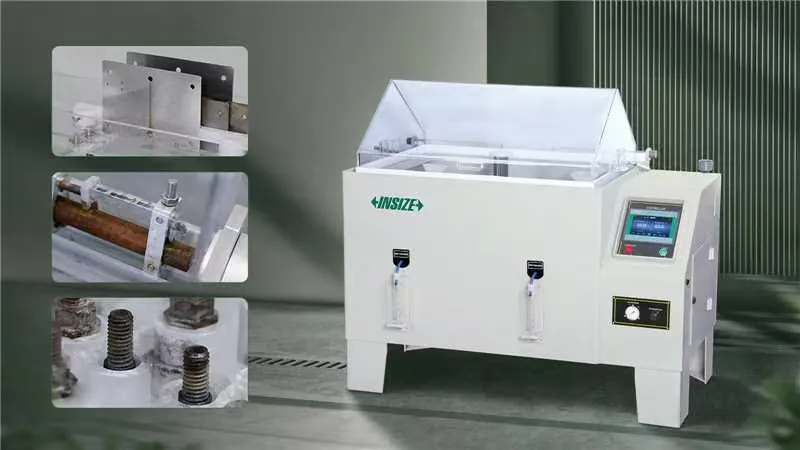
Using the INSIZE SFT Series Salt Spray Test Chambers as an example, salt spray testing provides four key benefits for product development and quality control.
1. Accelerate Corrosion Testing and Shorten the Evaluation Cycle
Corrosion in natural environments, such as coastal or industrial atmospheres, is usually a slow process. Natural exposure testing may take months or even years to produce visible corrosion, which makes it difficult to meet the testing requirements of modern product development and production.
A salt spray test chamber creates a controlled corrosive environment and continuously exposes specimens to salt spray. This accelerates the corrosion process, allowing manufacturers to evaluate corrosion resistance within a shorter testing period.
Depending on the model, the INSIZE SFT Series supports NSS (Neutral Salt Spray), AASS (Acidified Salt Spray), and CASS (Copper-Accelerated Acidified Salt Spray) testing. These methods provide different levels of corrosion testing for materials and surface treatments.
The SFT Series uses a precision nozzle and cone spraying device to produce an even mist. Brine flow and spray pressure can be adjusted to help maintain consistent salt spray deposition throughout the test.
This makes salt spray testing useful for evaluating the corrosion resistance of metal components, coatings, electroplated surfaces, and other surface treatments.
2. Create More Consistent and Traceable Test Conditions
Natural exposure tests are affected by location, climate, season, and other environmental factors. These variables can make test results difficult to reproduce and compare.
A salt spray chamber provides controlled test conditions, making it easier to perform repeatable corrosion evaluations. The INSIZE SFT Series is designed to comply with ISO salt spray test requirements. For applicable models, the test temperature is 35°C ±1°C for NSS and AASS, and 50°C ±1°C for CASS.
The equipment also allows the operator to adjust brine flow and spray pressure, helping maintain stable spraying conditions. In addition, a USB port is provided for downloading test curves and historical data, supporting test record management and traceability.
For quality engineers, controlled conditions and recorded test data make it easier to compare different materials, production batches, or surface treatment processes.
3. Identify Corrosion-Related Quality Problems Earlier
Corrosion often begins at coating defects, surface imperfections, edges, or areas where surface protection is weaker. These problems may not be easy to identify through natural exposure within a short period.
Salt spray testing can expose potential weaknesses in materials and surface treatments during product development or quality inspection. It can be used to evaluate processes such as electroplating, painting, and anodizing, helping engineers identify potential corrosion-related problems before products are released.
The even mist produced by the SFT Series helps provide consistent exposure of test specimens during testing.
By identifying problems earlier, manufacturers can investigate and improve surface treatment processes, reduce the risk of corrosion-related failures, and avoid unnecessary quality and after-sales costs.
4. Adapt to Different Testing Applications
Corrosion testing requirements vary between industries and products. Different materials, coatings, applications, and product sizes may require different test methods and chamber configurations.
For example, plated metal components may commonly require neutral salt spray testing, while some applications may require acidified or copper-accelerated salt spray testing according to the applicable specification.
The INSIZE SFT Series includes multiple chamber sizes and configurations for different testing requirements. Chamber sizes can also be customized, allowing the equipment to accommodate different types and sizes of test specimens.
The standard configuration includes a main unit and sample holder, while accessories such as nozzles, brine filters, salt, salt water preparation cups, collection cups, and measuring cylinders are available as specified.
Conclusion
The main purpose of a salt spray test chamber is to provide a controlled and repeatable method for evaluating corrosion resistance. Compared with natural exposure testing, it allows manufacturers to assess materials and surface treatments within a shorter and more controlled testing cycle.
For engineers and quality professionals, selecting the appropriate test method and maintaining consistent test conditions are essential for obtaining meaningful corrosion test results. The INSIZE SFT Series provides different test configurations, controlled salt spray conditions, multiple chamber sizes, and data export functions to support corrosion testing in product development and quality control.